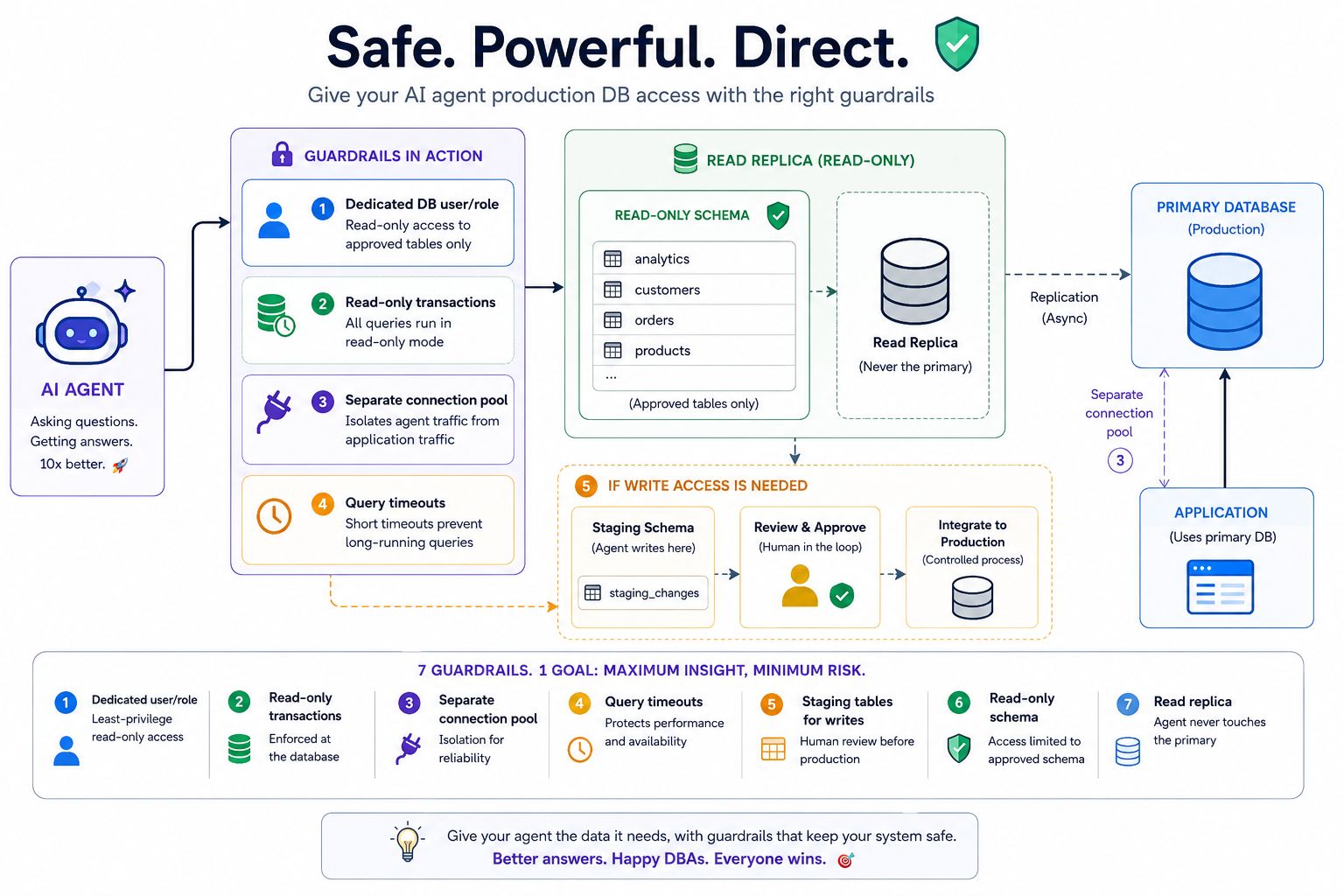
Should your AI agent have direct access to the production database? Unrestricted access is dangerous. Locking it down so hard the agent can’t do anything useful defeats the purpose. The answer is architectural guardrails, not a binary yes or no.
Seven strategies that work:
- Dedicated database user or role with read-only permissions on selected tables only.
- Read-only transactions - native in Postgres, and a cheap safety net.
- Separate connection pools, so agent traffic can never starve or block application traffic.
- Query timeouts, so a bad query from an agent can’t take down performance for everyone else.
- Staging tables for writes - the agent writes there, a review step promotes changes to production.
- A dedicated read-only schema, scoped down to exactly what the agent needs to see.
- Read replica access instead of the primary, so exploration never touches the system of record.
Most teams are treating AI agents like untrusted interns. The teams getting the best results are treating them like highly capable analysts, operating inside carefully designed guardrails.
The goal isn’t maximum restriction, it’s the right restriction. 🔒
Originally posted on LinkedIn.